How long a wrap
survives here.
Arizona is the hardest place in the country to keep vinyl on a car. What the real lifespans are, what fails first, and the difference between a wrap that lasts seven years and one that lasts two.
Cloak Wraps · Tempe, AZ · Updated
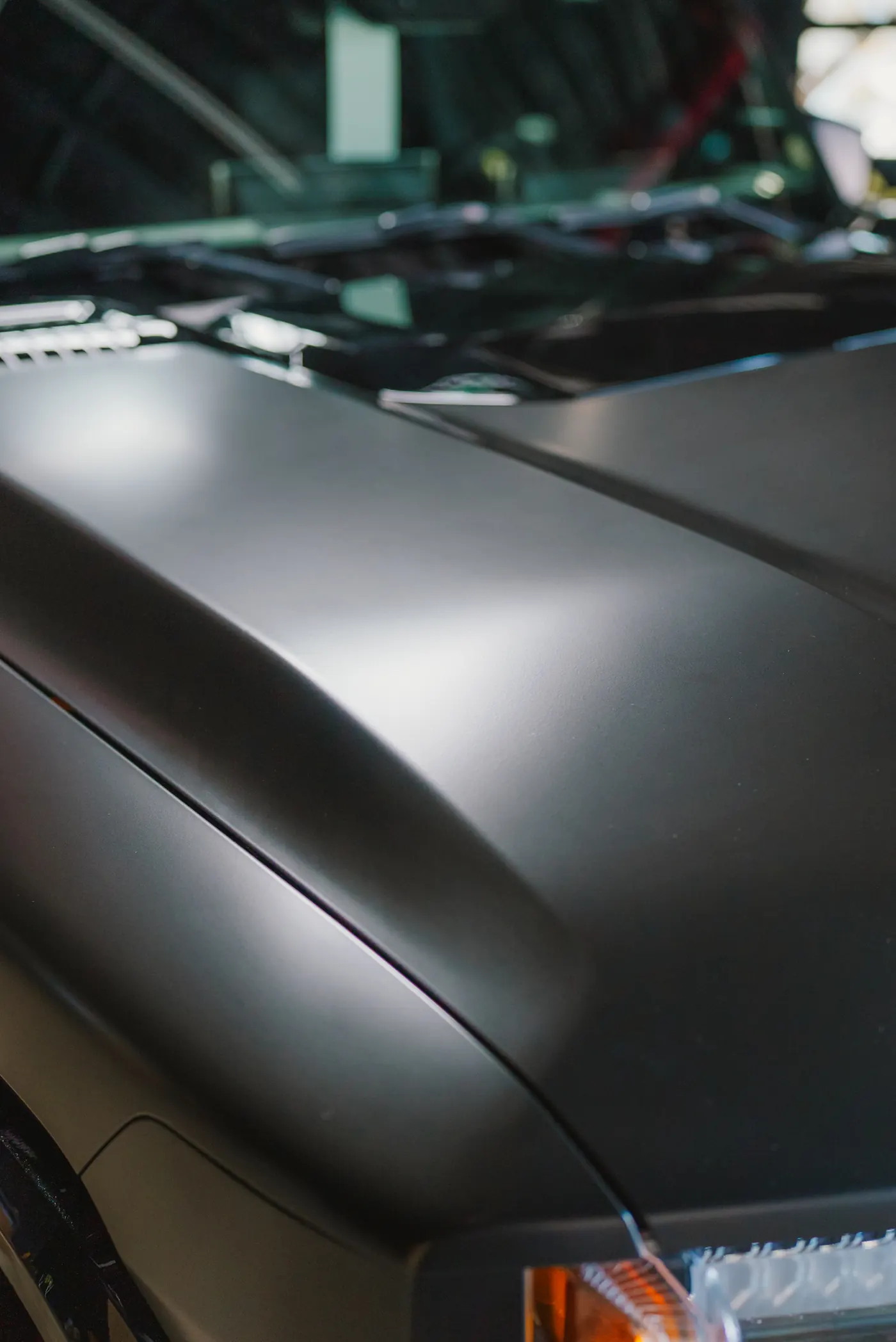
A quality cast-vinyl wrap on a garaged car in Arizona realistically lasts five to seven years. The same wrap on a car parked uncovered lasts three to five. Cheap calendared vinyl parked uncovered can start lifting inside a single year. Parking is the biggest variable you control.
Why here is different.
Vinyl manufacturers publish lifespans based on moderate climates. Arizona is not one, and three specific factors compress those numbers.
Surface temperature, not air temperature
Air temperature in July is beside the point. A dark panel in direct sun runs far hotter than the ambient reading — hot enough that adhesive softens, expands and then contracts again every single evening. That daily cycle, repeated for years, is what eventually breaks the bond at panel edges.
UV intensity and duration
Phoenix gets roughly 300 sunny days a year. It is not just that the UV is strong, it is that there is almost no recovery period. Pigment breakdown is cumulative, and reds, oranges and some blues go first.
Monsoon dust
Wind-driven dust during monsoon season is mildly abrasive and it finds every imperfection. A wrap with edges cut in place rather than wrapped around the panel has dozens of entry points for grit to work into.
What to actually expect.
These are the ranges we see on vehicles that come back to us, not manufacturer marketing figures.
| Setup | Realistic lifespan | First failure |
|---|---|---|
| Premium cast vinyl, garaged | 5 – 7 years | Gradual gloss loss |
| Premium cast vinyl, carport | 4 – 6 years | Fade on horizontal panels |
| Premium cast vinyl, uncovered | 3 – 5 years | Roof and hood fade |
| Calendared vinyl, uncovered | 1 – 2 years | Edge lift, shrinkage |
| Chrome / colour-shift, uncovered | 2 – 3 years | Finish degradation |
The two variables that move these numbers most are material grade and parking. Both of the extremes in that table are the same climate — the difference is what was installed and where the car sleeps.
What goes first.
Wraps in Arizona do not fail uniformly. They fail in a predictable order.
- Horizontal panels fade first. Roof, hood, trunk lid, upper shoulders. These take near-vertical sun for hours a day. A three-year-old uncovered wrap frequently has a visibly different roof than doors.
- Edges lift second. Wherever film terminates — around handles, badges, lights, panel gaps. This is where install quality shows most clearly. Film wrapped around a panel edge rarely lifts. Film cut flush on the surface eventually does.
- Adhesive bakes on third. Past a certain point of heat exposure, the adhesive stops releasing cleanly. This is why leaving a failing wrap on "until it gets worse" is a bad idea — removal cost rises sharply, and paint risk with it.
- Seams open last. Overlapped seams that were invisible at install become visible lines as the material contracts.
Not all finishes age the same.
Gloss
The most durable and the most forgiving. Cleans easily, hides minor imperfection, ages most gracefully. If you want maximum lifespan in this climate, gloss is the answer.
Satin and matte
Beautiful, and harder to live with. The textured surface holds contamination more readily, cannot be polished if something marks it, and shows fingerprints and fuel splash around the filler. Very worth it if you want the look — just go in knowing the maintenance is real.
Chrome and colour-shift
The most fragile category by a wide margin and the most expensive per square foot. In Arizona sun, plan on a noticeably shorter life than any other finish. We will install it and we will make it look extraordinary — we will also tell you plainly what you are signing up for.
What actually adds years.
In rough order of impact:
- Park covered. Nothing else comes close. Garage beats carport beats uncovered, and the gap between garage and uncovered is measured in years.
- Ceramic coat the vinyl. Yes, you can coat a wrap, and in this climate it is close to essential. It adds UV resistance and makes washing far gentler.
- Hand wash, never automatic. Brush washes attack edges directly. A two-bucket hand wash every couple of weeks does more good than any product.
- Deal with contaminants immediately. Bird droppings and bug splatter etch vinyl faster in heat. Hours matter, not days.
- Keep pressure washers off the edges. High pressure at a seam will lift film that would otherwise have held for years.
- Do not let a failing wrap ride. Removal gets harder and riskier the longer heat-baked adhesive stays on.
Questions.
Will the Arizona sun fade my wrap?
Does a wrap protect my paint from the sun?
Can I ceramic coat over vinyl?
What happens if I leave a failing wrap on too long?
Is a wrap a bad idea in Arizona?
Related guides.
Wrap Cost in Arizona
Why nobody can quote a wrap or paint protection film from a price list, the five things that actually move the number, and how to …
Read guide → COMPARISONPPF vs Ceramic Coating
These two get sold as alternatives. They are not. One is a physical barrier against impact, the other is a chemical layer that cha…
Read guide → BUYER GUIDEPPF Coverage Levels
Paint protection film is sold in packages, and the names are not standardised between shops. Here is what each level actually cove…
Read guide →Want a number for your vehicle?
Send photos and how the car is parked. You will get a specific package, a firm timeline and a straight answer about what is worth doing — including when the answer is nothing.